Senior Cat Care
The royal care manual for wise whiskers
Senior cats need the same love as always, plus sharper observation, easier access, softer landings, and humans who understand that dignity is part of care.
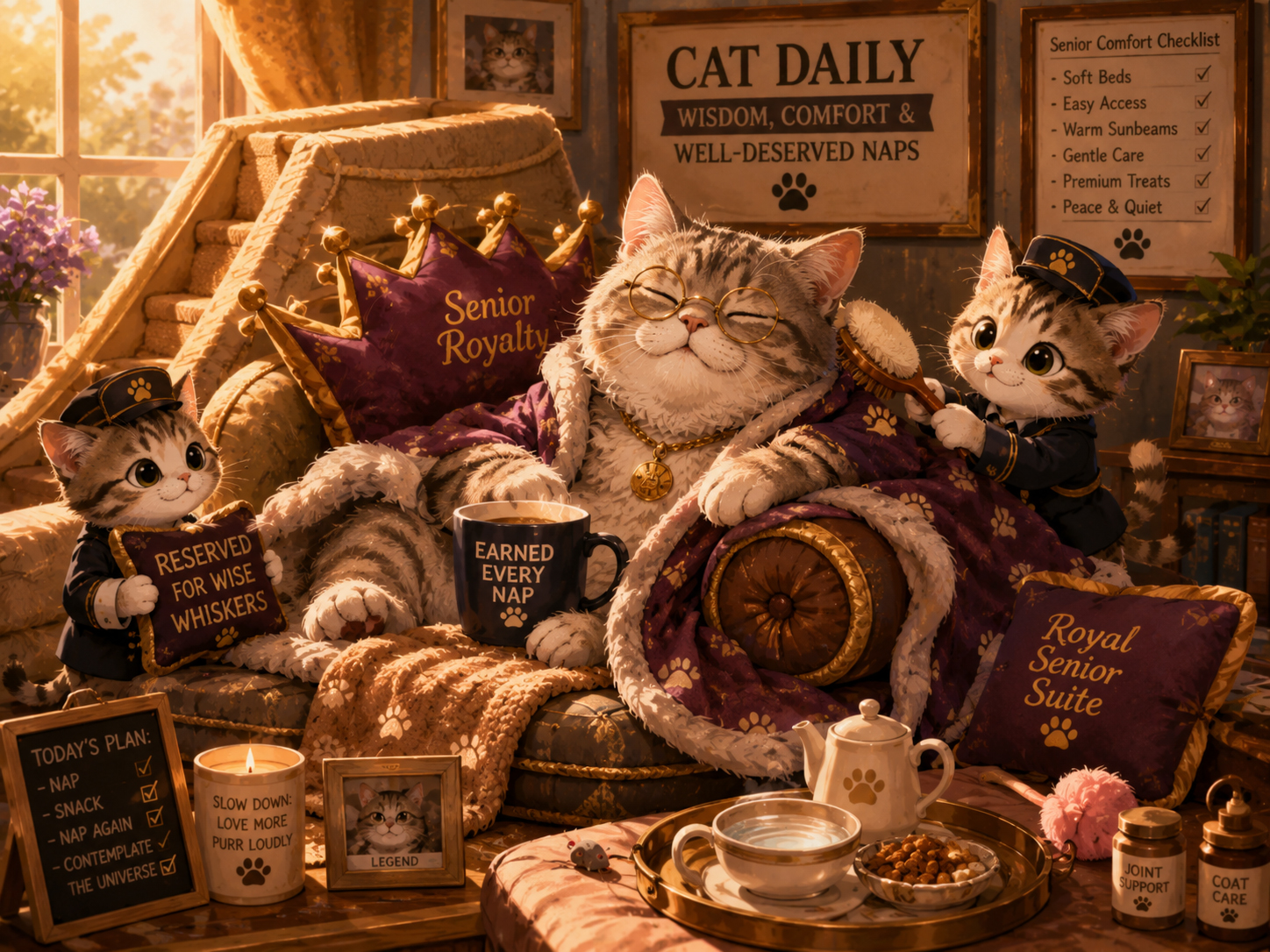
Senior does not mean done
Older cats can still play, explore, love routines, demand food, judge humans, and enjoy life deeply. Senior care is not about treating a cat as fragile furniture. It is about adapting the home so the cat can keep being a cat with less strain.
Editor Whiskers says every senior cat deserves an executive suite. Dr. Pawprint says the suite should include medical awareness, not just a fancy pillow.
The CatDaily senior comfort checklist
| Senior Need | Good Human Practice | Royal Translation |
|---|---|---|
| Easy access | Use ramps, steps, low beds, and accessible favorite spots. | The throne should not require mountain climbing. |
| Litter box | Choose low-entry boxes and easy locations. | Public works must respect older knees. |
| Food and water | Keep bowls easy to reach and monitor appetite and thirst. | The royal dining room shall be convenient. |
| Warmth | Provide soft, warm, draft-free resting places. | Sunbeam access is a constitutional right. |
| Grooming | Help gently with brushing if grooming becomes difficult. | The coat department may need staff support. |
| Observation | Notice subtle changes and call a vet when concerned. | The monarch’s schedule is medical evidence. |
Comfort: soft landings and warm opinions
Senior cats may prefer softer beds, warmer spots, lower perches, and quieter resting places. A cat who once leapt to a high shelf may now need a step, ramp, or lower alternative.
This is not spoiling. This is practical respect. The senior cat should not have to risk a dramatic jump just to reach the favorite window court.
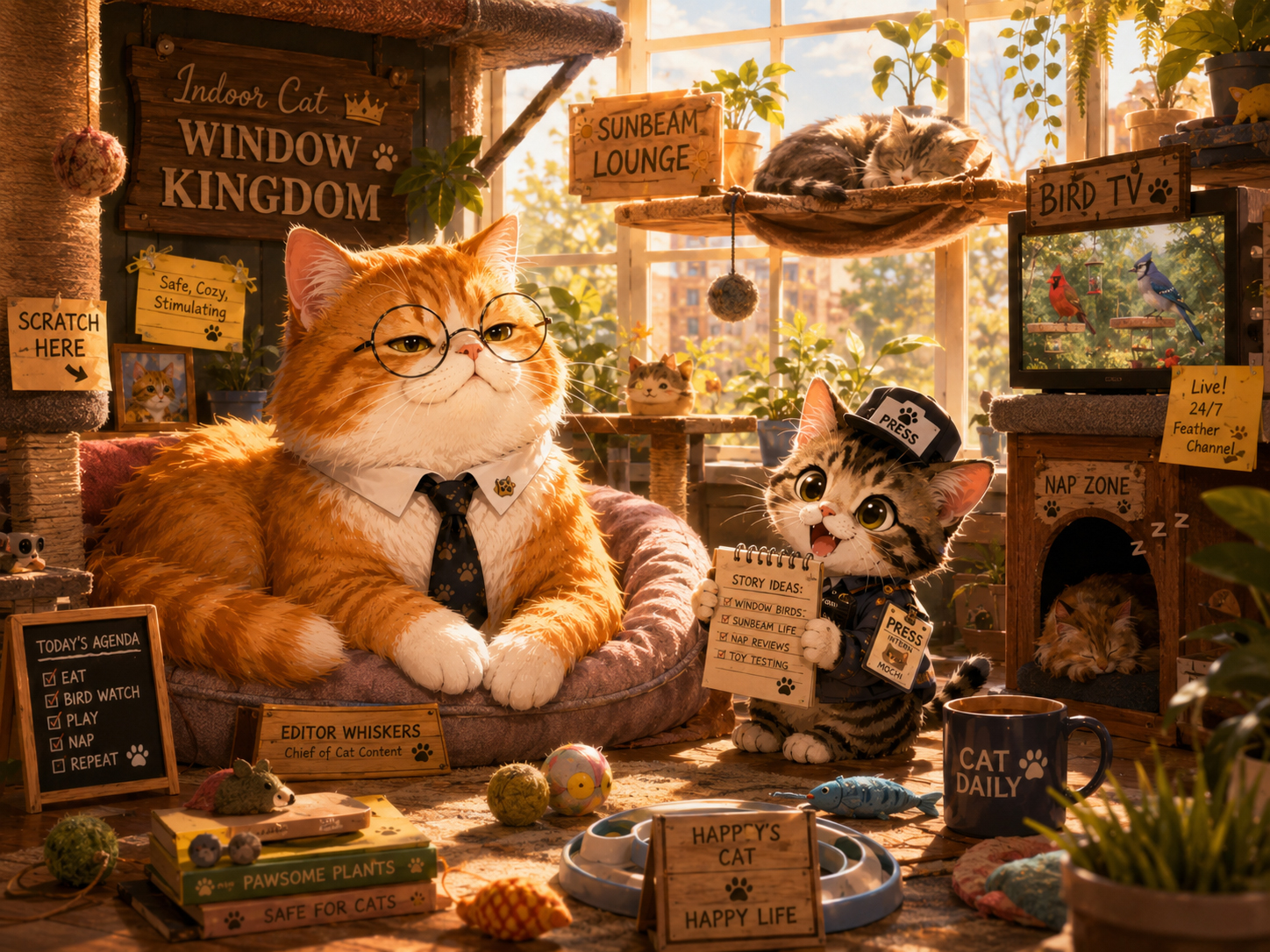
Food and water: watch the pattern
Appetite and thirst changes can be important in older cats. Eating less, eating more, drinking more, losing weight, drooling, chewing differently, vomiting, or seeming interested in food but not eating should not be dismissed as ordinary senior behavior.
Place bowls where the cat can reach them easily. Some senior cats benefit from raised or shallow dishes, softer food textures, or quieter feeding areas, depending on their comfort and veterinary guidance.
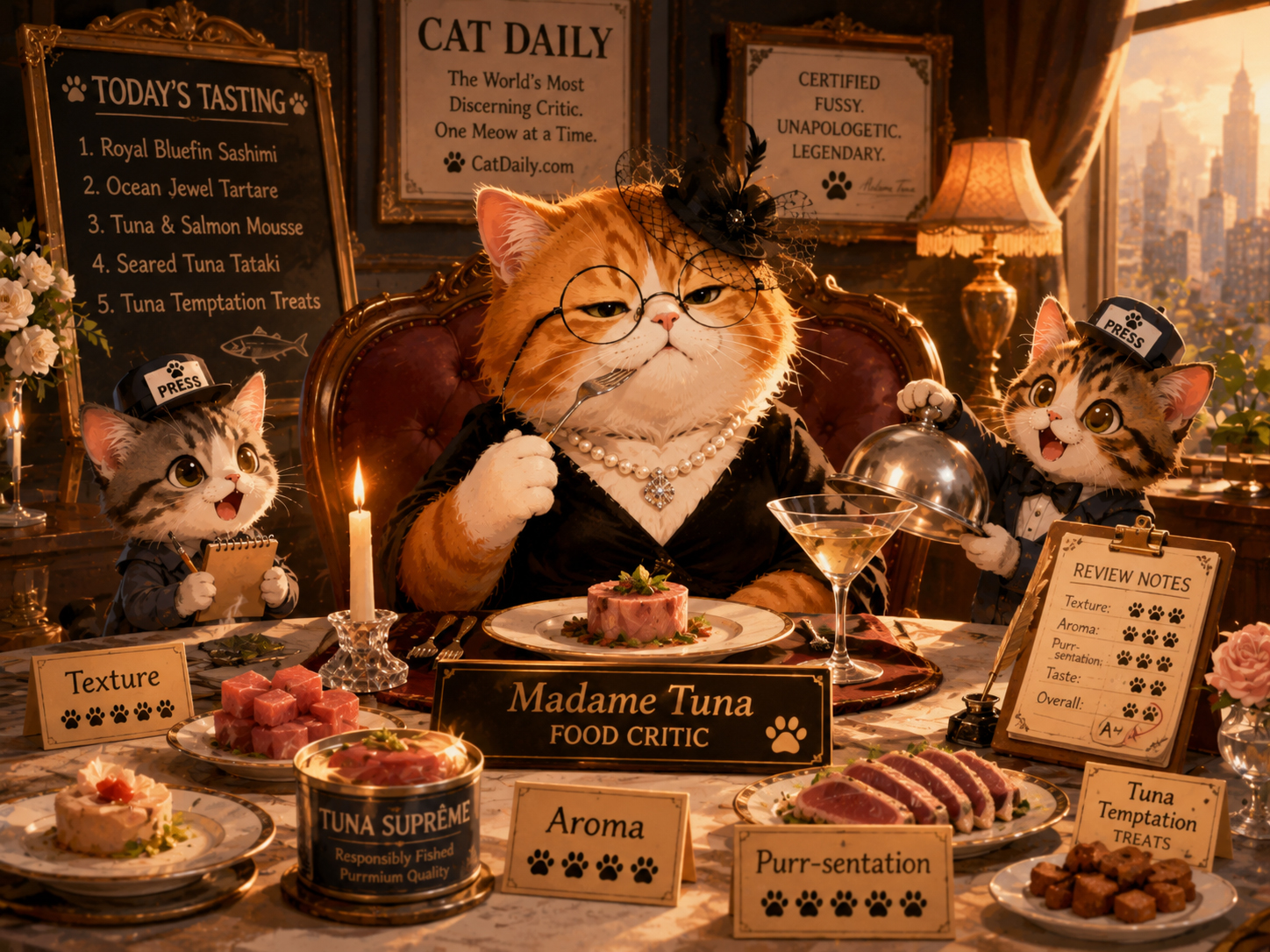
Litter box access: dignity begins at ground level
Older cats may struggle with high-sided boxes, stairs, slick floors, or long trips to the box. A low-entry litter box in an easy, quiet location can reduce stress and accidents.
If a senior cat starts missing the box, do not assume attitude. Pain, mobility, urinary problems, constipation, diarrhea, stress, or box access may be involved.
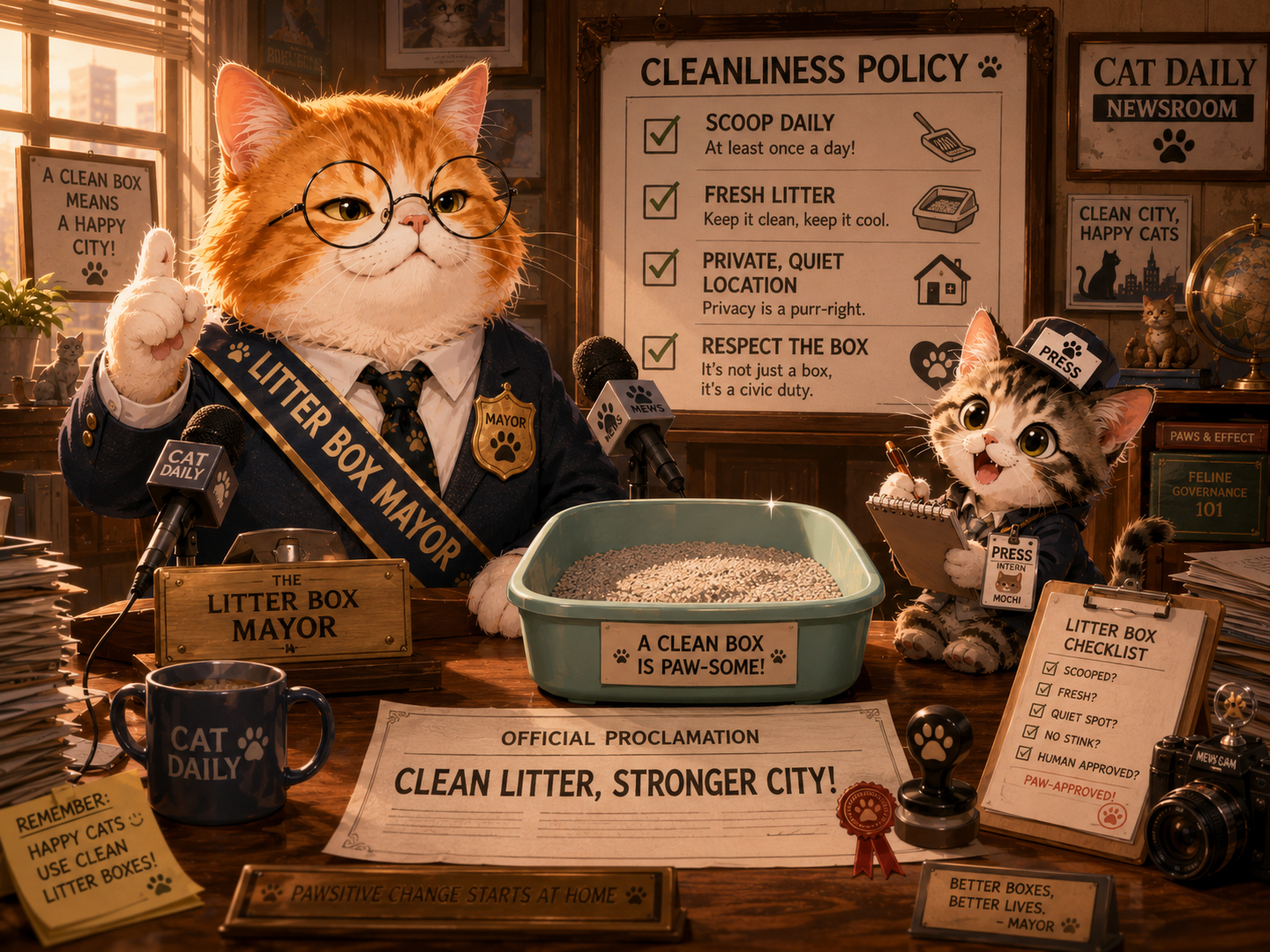
Mobility: make the kingdom easier to cross
Slippery floors, high jumps, steep stairs, and hard landings can become more difficult with age. Add rugs, traction mats, ramps, steps, and lower resting options where needed.
A cat who hesitates before jumping, avoids previous favorite spots, seems stiff, grooms less, or becomes irritable when touched may be uncomfortable. A veterinarian can help evaluate pain, arthritis, or other health issues.
Grooming: the coat department may need help
Senior cats sometimes groom less because of pain, stiffness, dental issues, illness, or reduced energy. Mats, dandruff, greasy fur, overgrown nails, or a messy coat can be clues.
Gentle brushing can help, but forcing a painful grooming session is not the goal. Make it short, calm, and kind. The senior cat has earned respectful service.
Enrichment: gentle play still matters
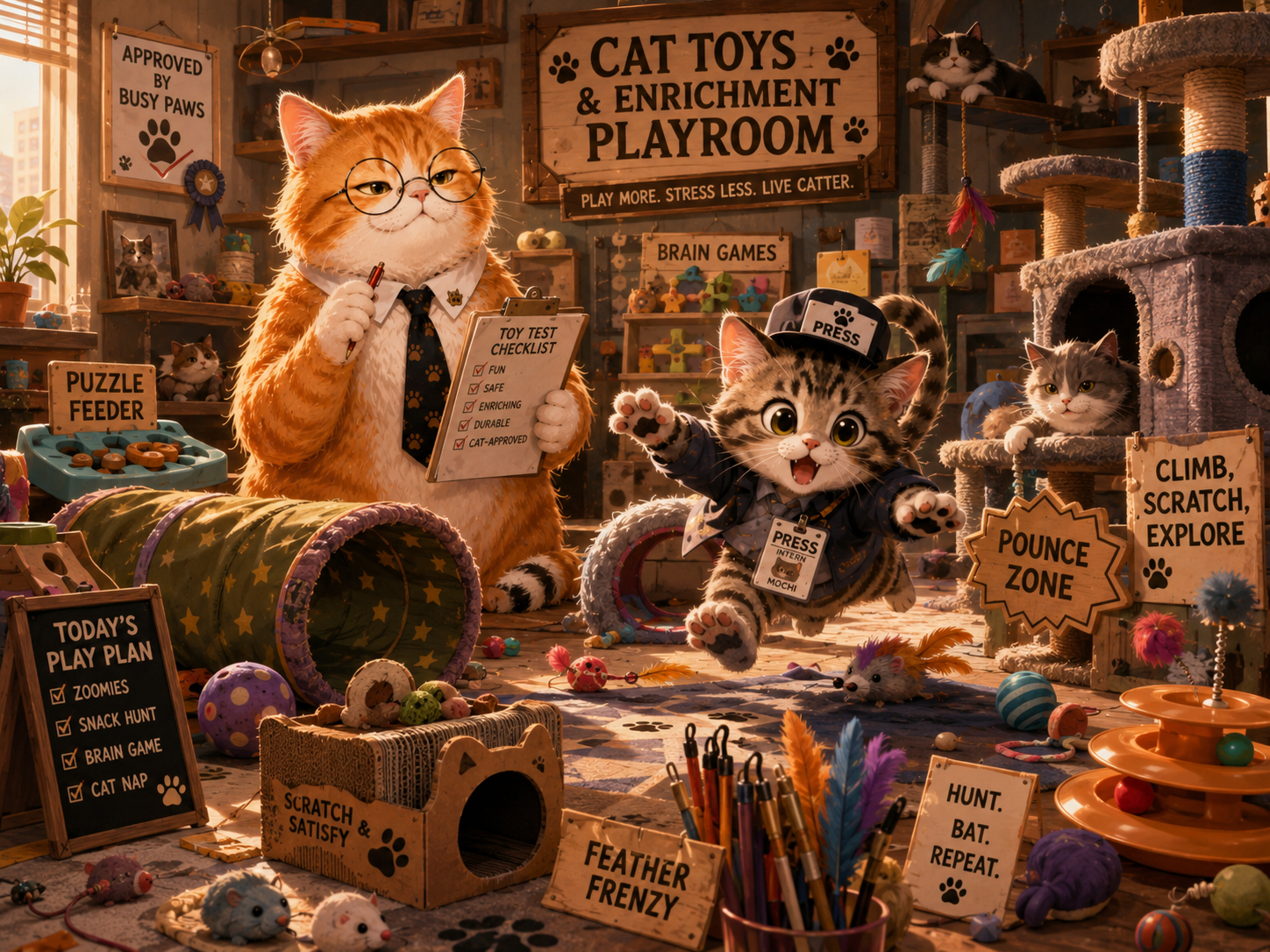
Senior cats often still enjoy play, but they may prefer shorter, gentler sessions. Slow wand play, puzzle feeders, easy toy batting, window watching, brushing time, and quiet companionship can all support quality of life.
The goal is not to make the senior cat perform kitten gymnastics. The goal is engagement, confidence, and pleasure.
Behavior changes: listen early
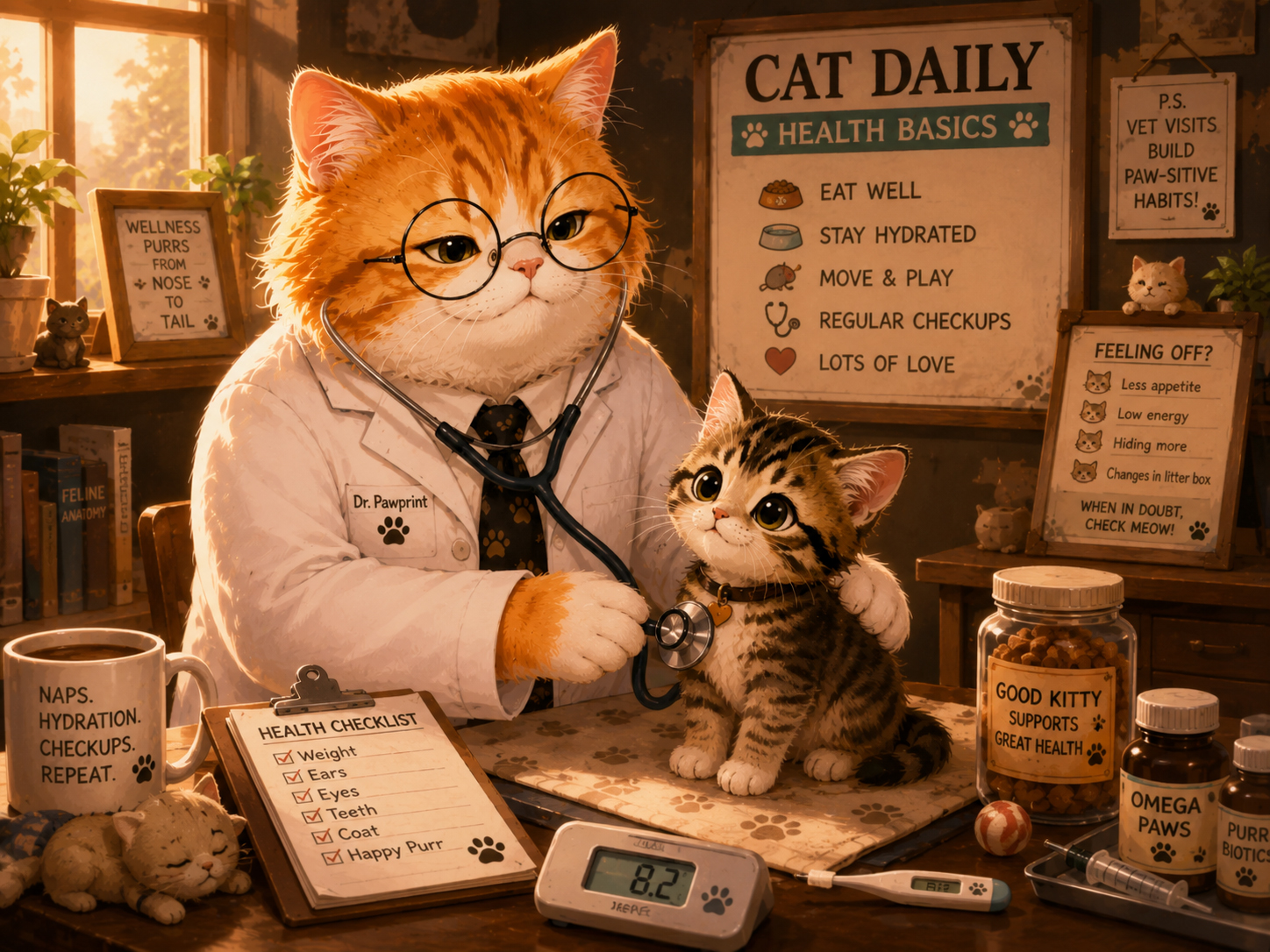
Senior behavior changes can be subtle. A cat may sleep in a new place, vocalize more, hide, become clingier, avoid stairs, eat differently, miss the box, groom less, or seem confused.
Sometimes these changes are environmental. Sometimes they are medical. Either way, changes are information.
Senior-cat red flags
Quality of life: comfort is a daily vote
Senior-cat care is about more than avoiding illness. It is about quality of life: comfort, routine, affection, choice, manageable movement, good food, clean litter, safe resting places, and reduced stress.
A senior cat may not need a grand palace. But the cat does need a kingdom that still fits.
The royal departments of senior care
Warm and soft
Provide cozy beds, quiet corners, stable perches, and draft-free sunbeam access.
Lower and easier
Use ramps, steps, low-entry boxes, traction rugs, and reachable food and water stations.
Small changes matter
Appetite, thirst, weight, litter-box habits, grooming, and mobility are daily reports.
Respect the monarch
Help gently. Do not force unnecessary handling. Let the senior cat choose safe comfort.
Closing decree: honor the wise whiskers
A senior cat has lived through many food formulas, many boxes, many suspicious vacuum events, and possibly several generations of humans failing to open doors quickly enough.
The CatDaily senior-care decree is simple: lower the jump, warm the bed, clean the box, watch the appetite, call the vet when patterns change, and never interrupt a well-earned nap without treaty-level justification.