Cat Safety
The official CatDaily hazard inspection for humans
Cats are clever, fast, curious, and occasionally committed to investigating exactly the wrong object. Home safety means reducing the risks before the cat appoints itself inspector.
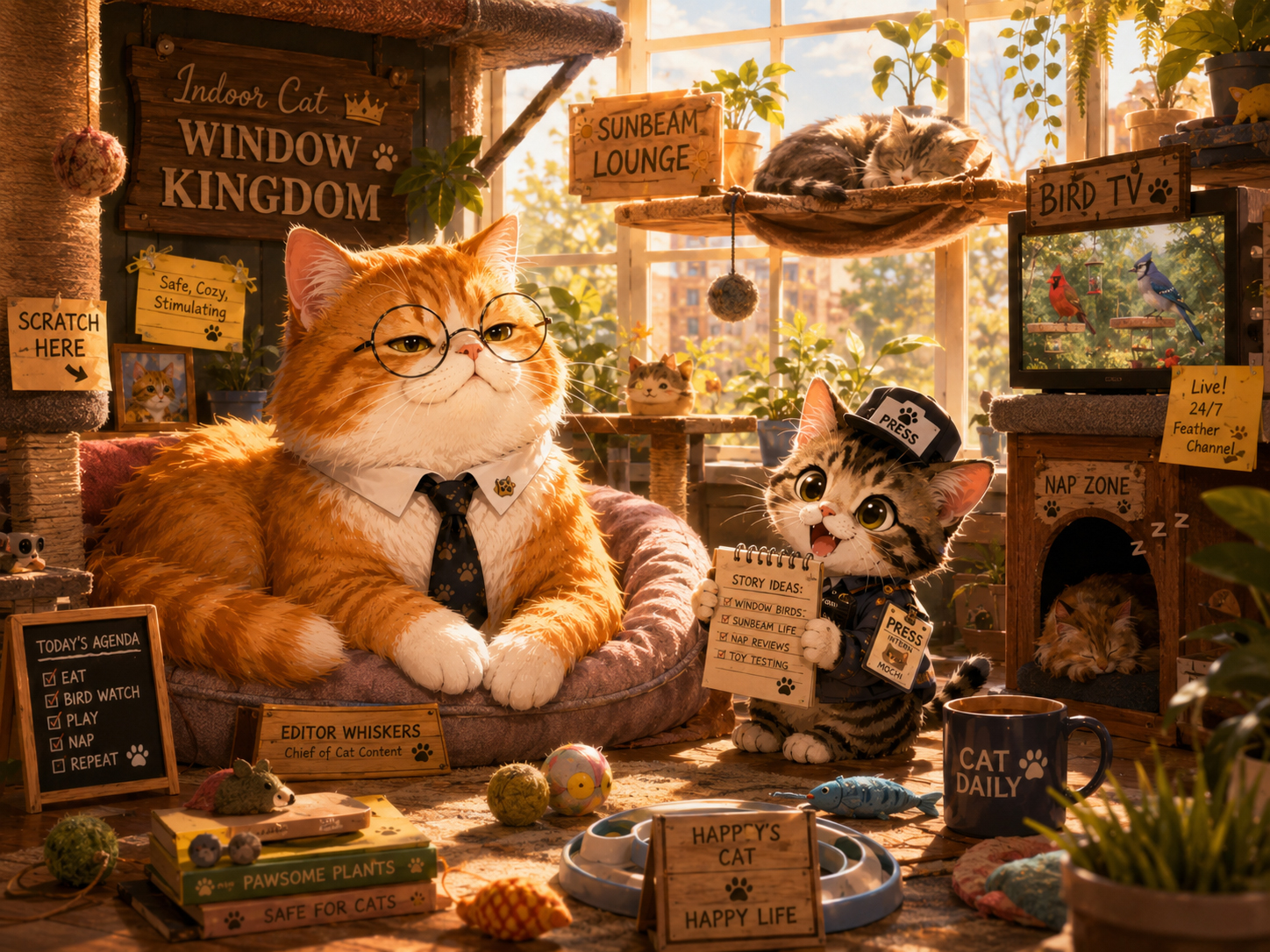
The big idea: make safe behavior easier than dangerous behavior
A cat-safe home removes obvious hazards and replaces risky temptation with better options. Give the cat scratchers instead of cords, window perches instead of unstable shelves, safe toys instead of loose string, and approved plants instead of mystery leaves from the dramatic vase.
Professor Purr calls this “environmental design.” Mochi the Intern calls it “why did you hide the ribbon?” Editor Whiskers calls it “basic risk management for creatures with paws and no respect for gravity.”
The CatDaily home safety checklist
| Hazard Area | Good Human Practice | CatDaily Translation |
|---|---|---|
| Windows and screens | Secure windows, screens, balconies, and high ledges. | The cat is not a qualified pilot. |
| Plants | Confirm plants and flowers are cat-safe before bringing them home. | Mystery leaves are under investigation. |
| Cords and wires | Hide, cover, or manage cords and provide better chew outlets. | The spicy string must be removed from the menu. |
| Strings and small objects | Keep yarn, ribbon, rubber bands, hair ties, and tiny items away. | Not every noodle is edible. |
| Chemicals and medicines | Lock up cleaners, medications, pest products, and supplements. | The forbidden cabinet is not a tasting room. |
| Appliances and furniture | Check dryers, washers, recliners, closets, drawers, and garages. | Cats can become secret cargo. |
Windows, screens, balconies, and the myth of feline aviation
Cats love window watching, but window safety matters. Screens can pop out or tear. Balconies can be risky. Open windows and high ledges need real protection.
A safe window perch should be stable, secure, and designed so the cat can enjoy Bird TV without filing a flight plan.
Plants and flowers: pretty does not mean safe
Some plants and flowers can be dangerous for cats. Do not assume a plant is safe because it looks harmless or because the cat looks sophisticated while chewing it.
Before bringing plants, bouquets, or holiday greenery into a cat home, check whether they are safe for cats. Place unsafe or uncertain plants completely out of reach, or better, do not bring them into the cat’s kingdom.
Cords, wires, chargers, and “spicy string”
Some cats chew cords, chargers, blinds, and dangling strings. This can lead to shock, injury, choking, or swallowed material. Manage cords with covers, routing, barriers, and supervision.
Provide safer chew and play alternatives. Do not let the cat conclude that your phone charger is the household’s finest enrichment toy.
String, yarn, ribbon, rubber bands, and hair ties
Long, thin objects can be especially risky if swallowed. Yarn, ribbon, tinsel, thread, dental floss, rubber bands, and hair ties should not be left where cats can chew or eat them.
Wand toys and string toys should be supervised and put away after play. Mochi may call this censorship. Dr. Pawprint calls it avoiding emergency surgery.
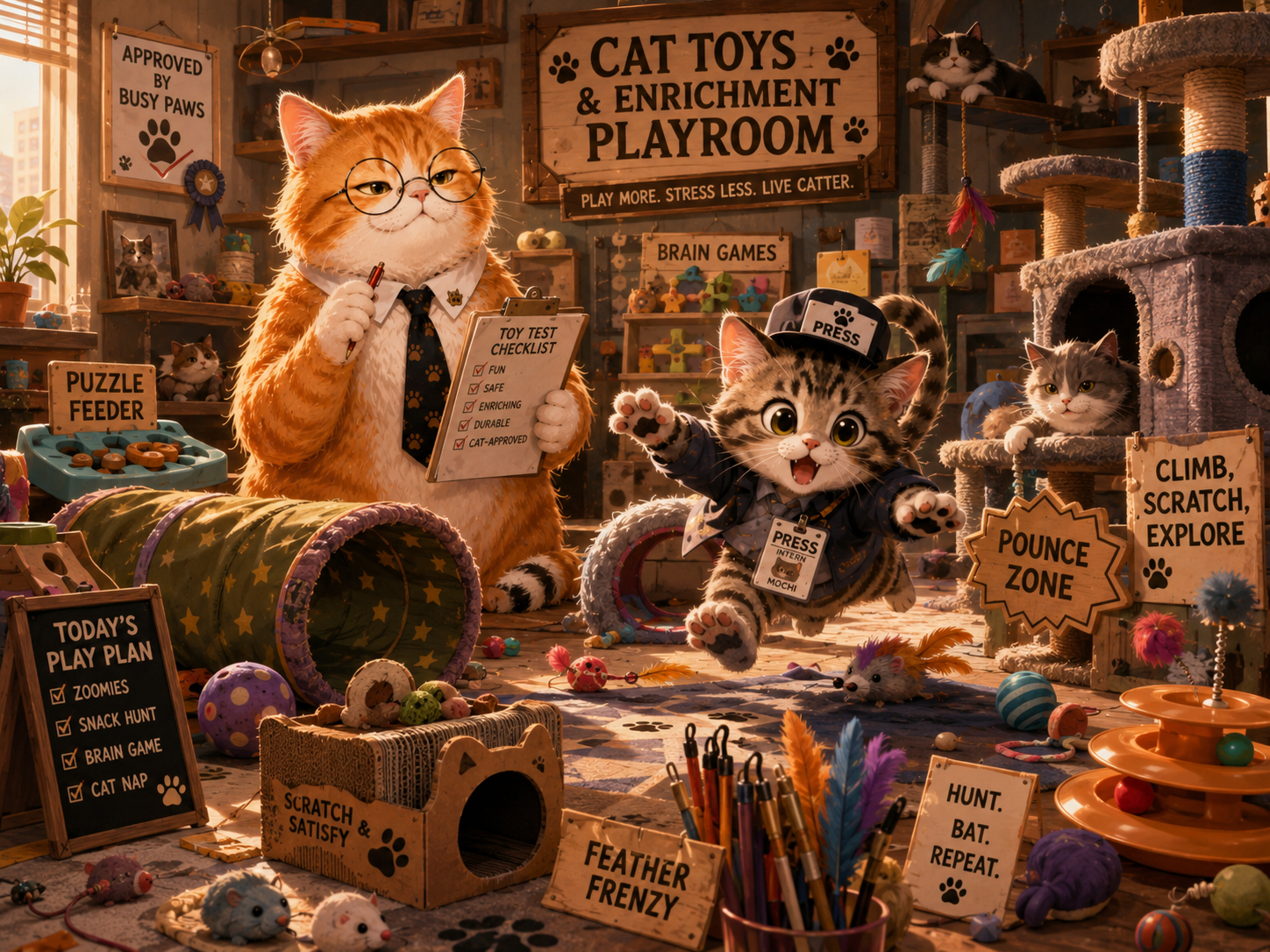
Food hazards and forbidden snacks
Cats should not have free access to random human foods, trash, bones, wrappers, spoiled food, alcohol, caffeine, or anything questionable. Some foods are unsafe for cats, and fatty or unfamiliar foods can cause digestive trouble.
Treats should be cat-appropriate and modest. Madame Tuna may demand a tasting menu. The human staff should remain firm.

Chemicals, cleaners, medications, and pest products
Store human medications, pet medications, supplements, cleaning products, laundry supplies, pest products, automotive fluids, paints, and chemicals securely. Cats can walk through spills, lick paws, chew containers, or investigate open cabinets.
Follow product directions carefully and ask a veterinarian before using flea, tick, or pest products around cats. Products safe for one species may not be safe for another.
Appliances, recliners, closets, drawers, and secret cat cargo
Cats hide in warm, dark, quiet places. Always check washers, dryers, closets, drawers, recliners, garages, storage bins, and boxes before closing, starting, folding, or moving anything.
A cardboard box may look empty. It may actually contain a silent furry tenant with a strong claim to property rights.
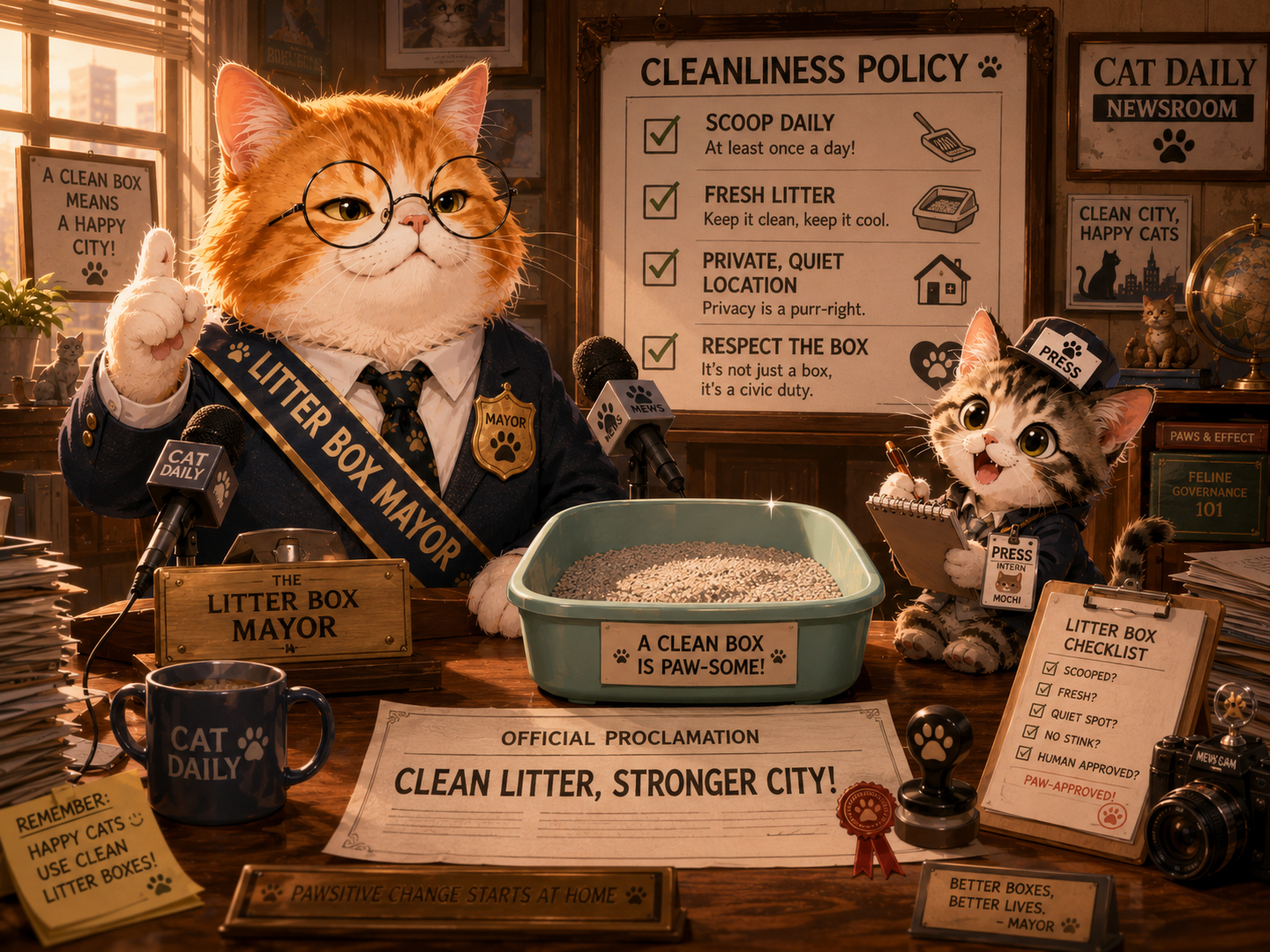
Litter-box safety and hygiene
A clean litter box supports comfort and health monitoring. Scoop regularly, wash hands after cleaning, and keep the box accessible. Watch for straining, blood, diarrhea, constipation, accidents, or changes in frequency.
Multi-cat safety and escape routes
In multi-cat homes, make sure cats can avoid each other, access resources without being blocked, and retreat from conflict. Provide multiple food stations, water stations, litter boxes, resting places, and vertical escape routes.
Conflict is not always loud. Staring, blocking, chasing, guarding, and quiet intimidation can all affect safety and stress.
Kittens and senior cats need extra planning
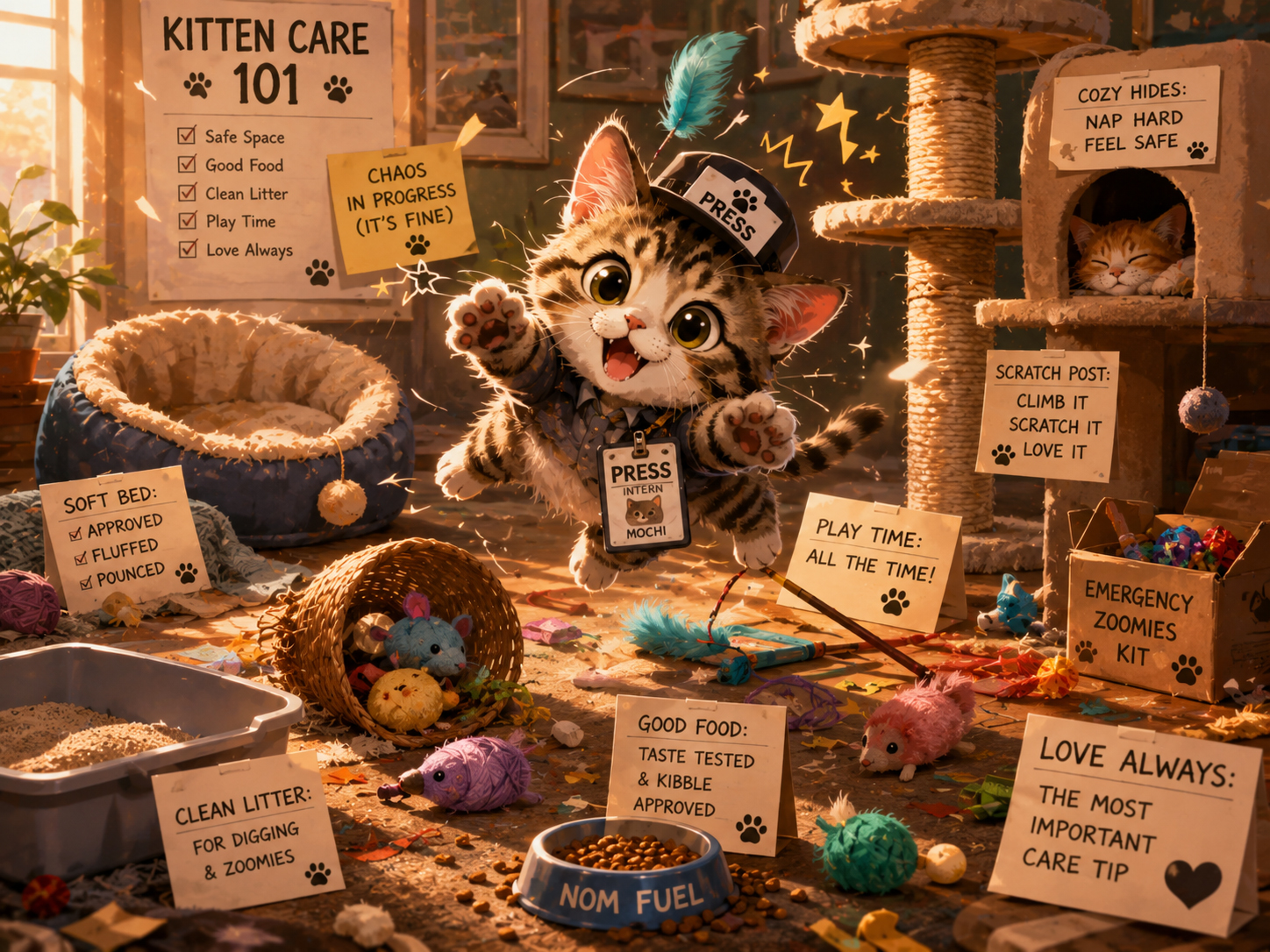
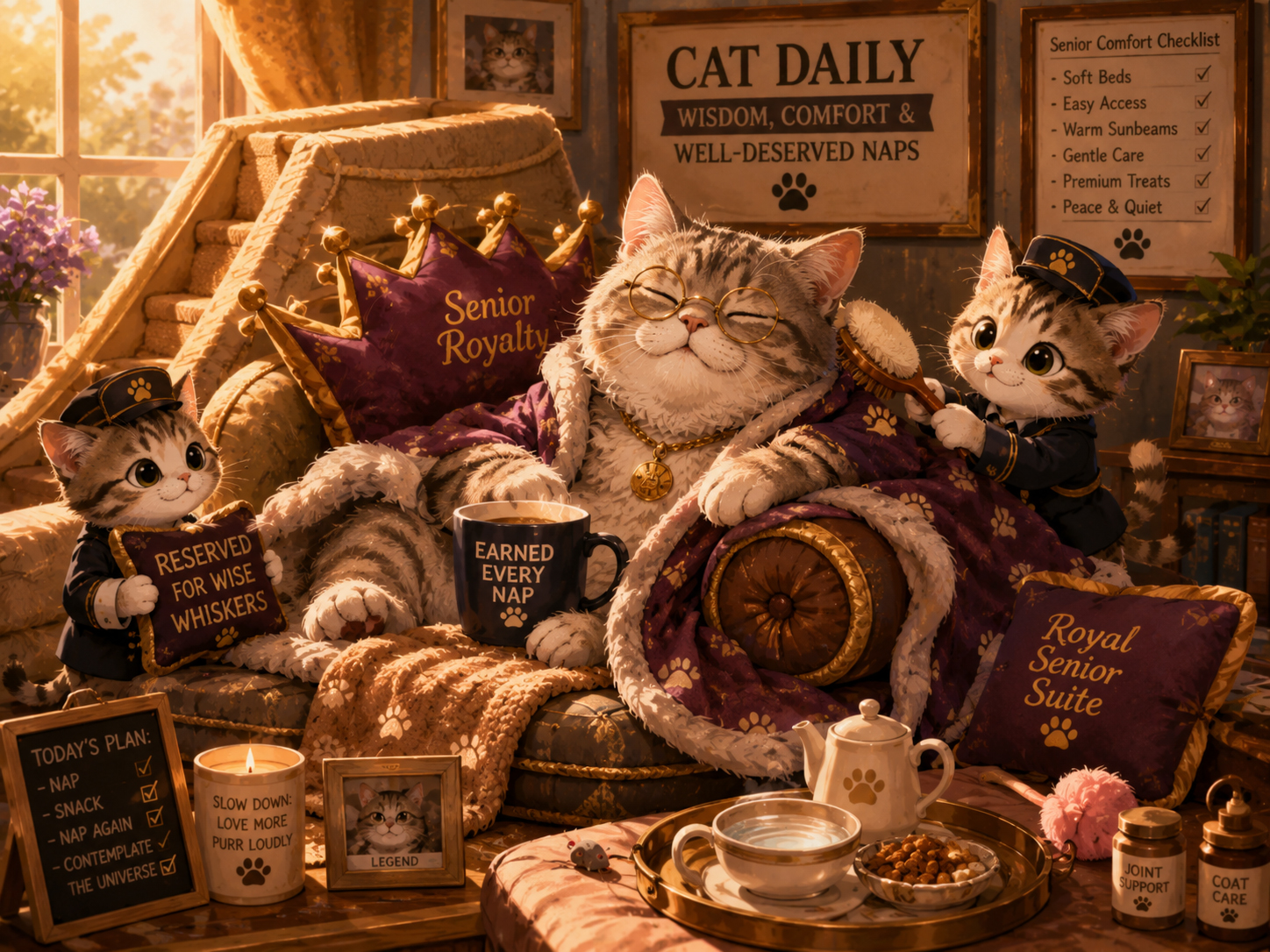
Kittens need extra protection from cords, small objects, falls, toxic items, and hiding gaps. Senior cats need easier access, traction, low-entry boxes, stable perches, and fewer risky jumps.
Emergency warning signs
Build a safer cat kingdom by department
Secure the view
Stable perches, secure windows, safe screens, and no unsupervised balcony adventures.
Inspect the chaos
Remove loose strings, tiny parts, broken toys, and anything likely to become a snack.
Lock up hazards
Store medicines, cleaners, chemicals, pest products, and unsafe foods securely.
Reduce stress
Give cats safe hiding places, vertical routes, and exits from conflict zones.
Closing safety bulletin
Cat safety is not about removing joy. It is about removing preventable danger so the cat can enjoy the sunbeam, chase the toy, scratch the post, inspect the box, and supervise the household without turning curiosity into an emergency.
CatDaily’s final safety order: secure the window, hide the string, check the dryer, lock the chemicals, verify the plants, inspect the toys, and never trust a suspiciously quiet kitten.